


Countries With No Property Tax: Where To Own Real Estate Tax-Free
August 10, 2026
Most investments come with expenses, but if you choose carefully, an annual tax doesn’t have to be an expense for your real estate investment. A number of countries around the world don’t charge property tax at all, including some attractive destinations with additional tax perks.
In this guide, we’ll examine countries with no property tax to help you maximize the profits from a real estate investment. You’ll also learn about:
- The benefits of investing in no-property-tax countries
- The countries with low property tax rates
- Considerations to make when purchasing property abroad

Why Purchase Property in a Country With No Property Tax?
Choosing to invest in real estate in a country that doesn’t impose property taxes has benefits beyond the reduced annual carrying cost. Some of those benefits are:
- Higher net rental yields, as you are free to keep a bigger portion of the income
- Fewer hidden costs and greater financial predictability, since you don’t have to account for tax increases
- Reduced administrative burden, with fewer interactions with local tax authorities
- Improved global mobility, especially if the country offers a residency-by-investment program
- Strong asset protection, if you choose a country with strong privacy protection laws
To maximize the benefits of foreign real estate investment, you should seek professional assistance to ensure proper legal and tax structuring.

What Countries Have No Property Tax? Our 6 Picks
Our list of investor-friendly countries with no property tax includes:
- United Arab Emirates
- Saudi Arabia
- Cayman Islands
- Monaco
- Bahrain
- Turks and Caicos
1. United Arab Emirates

The UAE doesn’t have an annual property tax at the federal or emirate level. The country also doesn’t subject its citizens or residents to personal income taxes, wealth taxes, or capital gains taxes. The UAE does levy a corporate income tax at varying rates.
Other property-associated duties and fees you might encounter as an investor or owner of property are typically levied on the emirate level, as shown in the example below:
| Duty/Fee | Who It Applies To | Rate in Dubai |
| Registration fee | Property buyers | 2%–4% |
| Housing fee | Tenants or residential property owners | 5% of the property’s rental value per year |
| Market fee | Commercial property owners | 5%–10% of the property’s rental value per year |
Property ownership as a residency vehicle: Under the UAE’s Golden Residency program, investing at least AED 2 million (USD 545,000) in a property in the country can make you eligible for residence.
2. Saudi Arabia
Saudi Arabia doesn’t impose a yearly property tax. However, the country instituted a special annual tax of up to 10% called the White Land Tax, which only applies to property that:
- Is vacant
- Is located within an urban boundary
- Is allocated for residential or commercial use
- Falls within the category of lands designated for the application of the law
In addition to not imposing a property tax, Saudi Arabia also doesn’t levy taxes on personal income, wealth, inheritance, or gifts. The country does, however, impose a 20% corporate income tax.
Fees and duties you might encounter when managing property in Saudi Arabia include:
| Duty/Fee | Who It Applies To | Rate |
| Real Estate Transaction Tax | Property buyers | 5% |
| VAT on rentals | Lessors of commercial property | 15% |
Property ownership as a residency vehicle: Saudi Arabia allows foreign real estate investors to apply for its Premium Residency program. Ownership and usufruct are both recognized as valid grounds for applying, and the property must have a minimal value of SAR 4 million (USD 1.1 million).
3. Cayman Islands

The Cayman Islands doesn’t have a property tax and doesn’t levy any other taxes, including personal and corporate income taxes, wealth, gift, or inheritance taxes. As a foreign individual, you are allowed to purchase property in the Cayman Islands freely.
Owing to a complete lack of a regulatory framework for taxation in the country, it’s very unlikely that the Cayman Islands will eventually introduce a property tax.
As of 2026, the country’s main sources of income remain import and stamp duties, as well as service-related fees. Stamp duty is also charged on real estate transactions at a rate of 7.5%, with a reduced rate for citizens of the country.
Property ownership as a residency vehicle: The Cayman Islands offer two options for residency based on real estate ownership:
- Permanent residency, with a pathway to citizenship, for a minimum investment of USD 2.4 million
- Residency without a pathway to citizenship, for a minimum investment of USD 1.2 million
4. Monaco
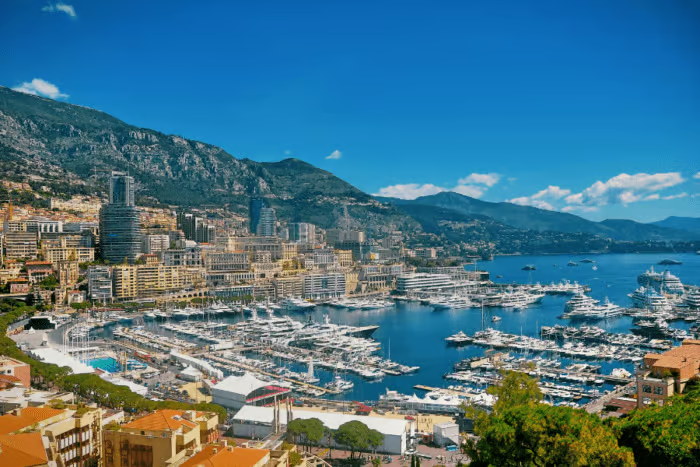
Monaco, Europe’s only tax-free country, doesn’t impose a tax on property ownership. It also doesn’t levy a tax on personal income, capital gains, or wealth. It does, however, impose an inheritance or gift tax on assets located within the country, as well as a corporate income tax on companies that earn at least 25% of their income abroad.
While you wouldn’t be liable for annual taxes for your property in Monaco, there are other real-estate-related taxes and duties you might be subject to in certain circumstances:
| Tax/Duty | Who It Applies To | Rate |
| Real estate VAT | Real estate developers | 20% |
| Registration duty | Real estate purchasers | 4.75% or 7.5% |
| Tenancy agreement duty | Tennants | 1% |
Due to the complex political and economic relationship between Monaco and France, which resulted in the Franco-Monegasque tax treaty of 1963, Monaco has maintained a stable tax policy with no indications of significant change.
Property ownership as a residency vehicle: Monaco doesn’t have a residency-by-investment program that would allow you to become a resident by investing in real estate in the country. It does, however, have a strict accommodation requirement for residency applicants, and owning a property in the country could help you meet it.
5. Bahrain
Like other Gulf Cooperation Council countries, Bahrain is a mostly tax-free jurisdiction. The country doesn’t impose annual property tax, income tax, wealth tax, or capital gains tax.
Certain corporations are subject to a corporate income tax. There is also a possibility that the country will introduce a standard 10% tax on corporate income starting in 2027.
As a property investor in Bahrain, you can be liable for the following duties and taxes:
| Duty/Tax | Who It Applies To | Rate |
| Stamp duty | Real estate buyer | 2%, or 1.7% if paid within two months |
| Municipal tax | Lessors of commercial property | 10% of the property’s rental value annually |
Property ownership as a residency vehicle: You can become eligible for the Bahraini Golden Residency Visa by investing at least BHD 130,000 (USD 345,000) in real estate in the country. Bahrain allows the investment to be spread across multiple properties.
6. Turks and Caicos
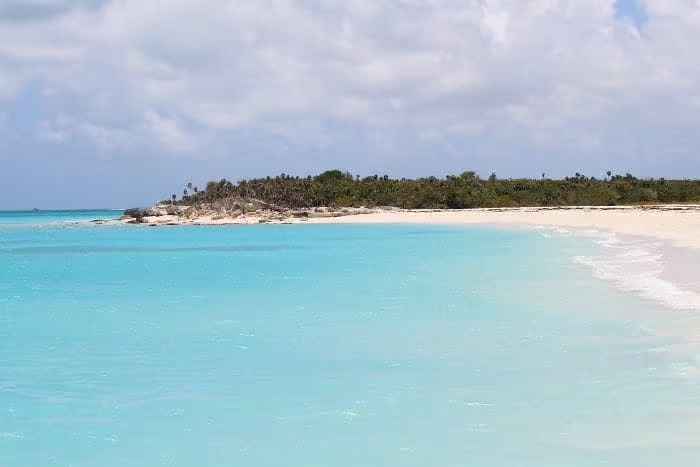
The Turks and Caicos are a tax-free country that doesn’t impose taxes on property, personal or corporate income, capital gains, wealth, or inheritance. The only form of direct taxation on individuals in the country is the mandatory contributions to the National Insurance and National Health Insurance.
If you decide to purchase property on one of the islands, you will be liable for stamp duty on the transfer. The rate at which the duty is charged will depend on the location of the property and its price:
| Location | Value in USD | Rate |
| All islands | Less than 25,000 | 0% |
| Grand Turk, North Caicos, Middle Caicos, South Caicos, Salt Cay | 25,000–100,000 | 5% |
| Grand Turk, North Caicos, Middle Caicos, South Caicos, Salt Cay | Over 100,000 | 6.5% |
| Providenciales | 25,000–250,000 | 6.5% |
| West Caicos | 250,000–500,000 | 8% |
| East Caicos | Over 500,000 | 10% |
Property ownership as a residency vehicle: You can become a resident of Turks and Caicos after making an eligible real estate investment. The value of real estate will depend on its location:
- USD 300,000: Grand Turk, North Caicos, Middle Caicos, South Caicos, Salt Cay
- USD 1 million: Any other island
Honorable Mentions: Countries With Low Property Tax
Investing in real estate in a country with no property tax can help you reduce ownership expenses. However, there are several reasons why you might opt for a low-tax country over one that charges no property taxes:
- More affordable entry prices: No-tax countries like Monaco and the Cayman Islands often have premium property prices
- Better lifestyle and infrastructure: Some of the most desirable lifestyle destinations, especially in Europe, impose property tax
- Higher growth potential: A low-tax country with a rising real estate demand can outperform a no-tax country on appreciation
- Strong residency programs: Low-tax countries can also have programs that grant you residency or even citizenship after making a real estate investment
If you want to explore some of the most desirable investment destinations with a low tax rate, consider looking into:
- Panama: The property tax rate ranges from 0% to 0.9%, and the country offers permanent residency with a real estate investment of USD 300,000
- St. Lucia: The property tax rate is 0.25% for residential and 0.4% for commercial property, and you can be eligible for citizenship with a USD 300,000 investment in real estate
- Cambodia: The tax rate is 0.1% on the value of the property above USD 25,000 (KHR 100 million), and the country offers a residency pathway for real estate investors under the Cambodia My 2nd Home program
What To Consider When Buying Property Abroad
Foreign countries can offer compelling opportunities for international real estate buyers. To make the most of them, you will need to prepare carefully. International purchases are more complex than local acquisitions, and to avoid going in blind, you should:
- Perform due diligence with local experts: Work with trustworthy lawyers who understand the local market and regulations
- Consider all of the taxes and fees: In addition to the property tax and the stamp duty or registration tax, you might also be liable for rental taxes or additional municipal taxes
- Research local financing options: Unless you’re buying with cash, check whether you can access local financing options at a lower cost
- Examine residency investment options: If you’re purchasing to secure residency, you may consider options such as a bank deposit or government bond purchase for a more hands-off investment
- Visit before purchasing: If you plan to spend a significant amount of time in the property, you should evaluate several locations in the country to decide on the one that suits you the best
Buying property abroad can be a complicated process that’s best handled with professional assistance. However, bringing multiple advisors on board to cover all of the implications of the purchase can add another layer of complexity to the process. To ensure that every aspect of purchasing real estate abroad is managed properly, contact Nomad Capitalist.
Invest in Foreign Real Estate With Nomad Capitalist
Nomad Capitalist is a consultancy firm that specializes in global mobility and wealth protection. We’ve helped more than 1,500 clients achieve their lifestyle and financial goals by obtaining second residency, reducing their tax liabilities, and investing in assets abroad.
Nomad Capitalist integrates all of its services in the creation of an Action Plan. Based on your current situation and desired outcome, we will develop a strategy for you and create a step-by-step blueprint for the most efficient implementation.
Here’s what partnering with Nomad Capitalist looks like:
- We ask you to fill out a form to help us determine whether we’re a good match
- We schedule a 45-minute onboarding call to discuss your circumstances and goals
- Our specialist agents create an Action Plan and present it to you for approval
- We implement the Plan over a year-long period, managing the administrative parts
- You continue receiving support from us even after the Plan was implemented
If you’re interested in purchasing real estate abroad, we can advise on the most tax-efficient jurisdictions to make a solid real estate investment. We can also review your plans and strategy from a second residency point of view, ensuring you choose a country where property ownership can also lead to an unlimited stay.


Alternative Investment Strategies: A Guide to Asset Classes and Investment Approaches
The alternative investment market is experiencing significant growth and is projected to reach $32 trillion in assets under management by 2030. This growth is driven in part by the desire to invest in assets with low correlation to public markets. At the same time, evergreen funds are broadening access to alternative investments, creating opportunities for […]
Read more

Wine Investment: How It Works and How To Get Started
Wine collecting has long been a niche pursuit for connoisseurs, but it has steadily evolved into a popular alternative asset accessible to high-net-worth individuals looking to invest beyond traditional markets. In this article, we’ll examine wine investment as a means to diversify your portfolio. You’ll learn about: What Is Wine Investment? Wine investment is buying […]
Read more

Tangible vs Intangible Assets: Definitions, Examples, and Differences
For most people, the difference between tangible and intangible assets only becomes relevant at very specific moments, such as when planning an estate, seeking collateral for a loan, or dividing assets during divorce proceedings. The tangible vs intangible asset distinction can also play an important role in the lifecycle of a business. Events such as […]
Read more