

Crypto can be subject to several types of tax depending on where you live. You can be liable for capital gains tax when you sell, income tax if you trade frequently, goods and services tax when you pay something with crypto, or even wealth tax just for holding crypto in your portfolio.
Some countries, however, exempt cryptocurrencies and related activities from some or all of these taxes.
In this guide, we’ll examine the most popular crypto-tax-free countries to determine their tax treatment of cryptocurrency. You’ll also learn about the most accessible residence programs in those countries for crypto investors and traders.
Top 8 Countries With No Crypto Tax
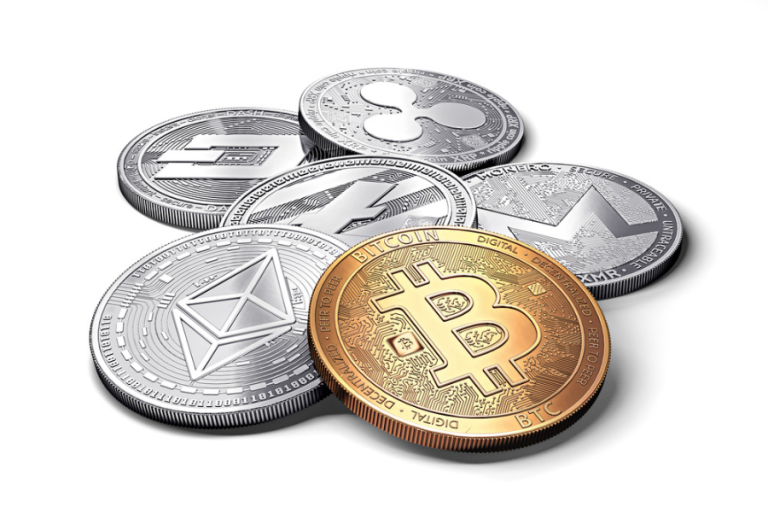
Our list of crypto-friendly countries with no tax, either outright or conditionally, includes:
- United Arab Emirates
- Cayman Islands
- Germany
- Portugal
- Singapore
- Georgia
- Bermuda
- Switzerland
United Arab Emirates
The UAE’s zero-tax regime extends to crypto: as an investor or a trader, you won’t be liable for any personal income or capital gains taxes in the country. The country doesn’t impose a wealth tax either, although it does levy a 9% corporate income tax.
The UAE, and especially Dubai, has been at the forefront of crypto adoption and regulation. The emirate established the world’s first independent crypto regulator, the Virtual Assets Regulatory Authority (VARA), and has become home to the regional headquarters of notable industry names such as Binance, Crypto.com, and BitOasis.
You can apply for the UAE’s Golden Residency program for a five- or 10-year renewable residence in the country. The two categories that might appeal to you the most are:
- The investor category: Apply for residence after making an AED 2 million (USD 545,000) investment in the country (real estate is allowed)
- The entrepreneur category: Apply with an innovative or technical project with demonstrable value and/or support from a business incubator or relevant authority in the country
Cayman Islands

For crypto investors, the Cayman Islands delivers on its reputation as one of the world’s most prestigious tax-neutral jurisdictions. Your crypto investments will not be subject to a personal or corporate income tax, capital gains tax, or withholding tax on dividends or interest.
In addition to its tax neutrality, the Cayman Islands’ early regulatory clarity contributed to its development into a globally significant Web3 hub. The country’s pioneering 2020 Virtual Asset Service Provider Act, and its 2024 amendment, created a legal framework that attracted blockchain businesses, including crypto exchanges, DeFi platforms, DAOs, real-world asset tokenization projects, and crypto-native funds.
You can become a resident of the Cayman Islands by having a substantial business presence in the country, or by meeting one of the following criteria:
| Requirement | Minimum Value |
| Substantial personal income | KYD 120,000 (USD 144,000) |
| Local bank deposit | KYD 400,000 (USD 480,000) |
| Investment | KYD 1 million (USD 1.2 million) |
Germany
Germany’s main claim to crypto-friendliness comes from its one-year capital gains exemption for cryptocurrencies. Long-term gains from crypto are exempt from capital gains tax, allowing you to avoid paying taxes on any profits from crypto you held for at least a year. In May 2026, the country’s parliament rejected a proposal to abolish the exemption.
Beyond this exemption, Germany can be considered a high-tax jurisdiction. The country imposes a progressive tax on personal income (0%–45%), capital gains tax (25%), corporate income tax (15.8%), and an additional trade tax on businesses (8.75%–20.3%).
If you still want to become a resident of Germany, the most realistic path is to either secure employment or start a business in the country. While Germany doesn’t maintain a minimum investment requirement, your business idea will be evaluated against the following criteria:
- A positive economic impact of the project
- A regional economic interest or need for the specific business activity
- Secured financing
Portugal
Portugal’s treatment of cryptocurrency is similar to Germany’s: capital gains tax is applied to income from the sale of cryptocurrencies held for fewer than 365 days. Gains resulting from the sale of crypto assets held for more than a year are not subject to tax.
Portugal was a crypto tax haven, with no taxes on cryptocurrency whatsoever, until 2023. Since then, the country has introduced regulations recognizing cryptocurrencies as a digital representation of value or rights and subjecting them to taxation. Income derived from mining and staking is also subject to income tax upon the sale of the asset.
You can become a resident of Portugal by making one of the following eligible investments in the country:
- A EUR 500,000 (USD 580,000) investment in a collective investment fund or a company
- A EUR 500,000 (USD 580,000) donation to scientific research
- A EUR 250,000 (USD 290,000) donation to artistic or cultural causes and activities
- Any investment that can create at least 10 jobs
Singapore
Singapore is one of the most crypto-friendly countries in the world.
It doesn’t tax wealth or capital gains, and you or your company will not be liable for income taxes when selling crypto as long as the sale isn’t classified as trading. Criteria for determining if sales qualify as trading include frequency of transactions, holding period, and mode of financing. If the activity does qualify as trading, you might be liable for personal income tax (24%) or corporate income tax (17%).
Crypto is also largely exempt from Singapore’s goods and services tax. You won’t be liable for it when you:
- Sell your cryptocurrencies for fiat currencies
- Exchange one cryptocurrency for another
- Provide loans in cryptocurrency
- Purchase goods and services in cryptocurrency
Mining and staking can be subject to taxation if they’re provided as a service to an identifiable counterparty.
Becoming a resident of Singapore can be challenging as the country’s residence programs are highly selective. If you want to apply under the Global Investor Program, for example, you will have to make a significant investment in the country:
- At least SGD 10 million (USD 7.9 million) if you invest in a local business
- At least SGD 25 million (USD 19.7 million) if you invest in a Singapore-focused fund
You can also establish a Family Office with at least SGD 200 million (USD 158 million) of assets under management, with one quarter being invested in Singapore.
Georgia
Georgia is a country with no cryptocurrency tax, provided you meet one condition: you have to be a resident of the country, not a citizen.
Georgia has a territorial tax system for residents, levying personal income or capital gains taxes only on income originating within the state. Crypto-related income is considered to be derived in the virtual space, since crypto assets don’t have a physical form or location and usually don’t have an identifiable issuer.
Georgia also doesn’t have a wealth tax that could be levied on your cryptocurrency. The country has a corporate income tax rate of 15% for most businesses and 20% for financial companies.
To become a resident of Georgia, you can invest at least USD 300,000 (approximately GEL 790,000) in a business or real estate in the country. You can be issued a residence permit for indefinite stay if your business activity in the country meets the following turnover criteria:
| Year in Business | Minimum Yearly Turnover |
| First year | USD 50,000 (Approximately GEL 132,000) |
| Second year | USD 100,000 (Approximately GEL 263,000) |
| Years 3–5 | USD 120,000 (Approximately GEL 316,000) |
If you invest in real estate, you only need to hold it for five years to get indefinite stay residency in Georgia.
Bermuda
Bermuda doesn’t impose any taxes on individuals, including personal income, wealth, capital gains, or inheritance taxes.
The country doesn’t impose a corporate income tax, with the only exception being multinational companies operating in the country with annual revenue of USD 870 million or more. These businesses are liable for a 15% income tax.
In addition to being a practically tax-neutral jurisdiction, Bermuda is also crypto-friendly in other ways. For example, purchases of crypto are generally exempt from the foreign currency purchase tax. The country also offers a mechanism for existing crypto businesses to seek an exemption from future tax attempts.
As an investor, you can become a resident of Bermuda by making a donation or investment of at least BMD 2,5 million (USD 2.5 million). The investment options include:
- Investing in residential or commercial real estate
- Starting a new business or investing in an existing one
- Contributing to Bermuda’s Sinking Fund or Trust Fund
- Donating to a registered charity
- Investing in a socially beneficial project
Switzerland
Switzerland is one of the foremost global financial centers with a crypto-friendly environment and a strong blockchain and Web3 ecosystem, particularly in the Crypto Valley in Zug.
Switzerland is not a completely crypto-tax-free jurisdiction. While the country doesn’t have any special taxes that target cryptocurrencies, your capital gains from selling crypto will be exempt from income tax only if you qualify as an individual investor. If your crypto activity qualifies as self-employment or professional trading, it will become subject to taxation.
In practice, the difference between personal and professional activity comes down to:
- Whether you’re using your own or borrowed funds
- How quickly you dispose of your crypto
- How many transactions you make
- Whether you use trading income to cover living expenses
Similarly, mining can be considered self-employment and become subject to taxation. Additionally, Switzerland has canton-level wealth taxes that apply to your crypto assets.
You can apply for a non-work permit to reside or settle in Switzerland if you can prove that you have sufficient financial means to support yourself and do any of the following:
- Reach a lump-sum agreement with the authorities of a canton
- Make a significant investment in certain cantons
Factors to Consider Before Moving to a Country With No Crypto Tax

Relocating to one of the countries where cryptocurrency is tax-free might reduce your crypto tax burden. However, moving comes with important financial and legal considerations you should plan for, such as:
- Exit taxes: Some countries impose an exit tax when you end tax residency. In practice, this is done by treating your assets as if they were sold on the day of your departure and subjecting them to capital gain tax
- Establishing genuine tax residency: Moving to a different country doesn’t automatically make you its tax resident. Most jurisdictions will require you to spend at least 183 days per year in the country, and also establish genuine ties to it
- Lingering tax obligations: Becoming a tax resident of one country doesn’t necessarily release you from all tax obligations in your home country, especially if you’re a U.S. citizen
- Your new country’s broader financial picture: In addition to meeting the requirements for keeping your crypto tax-free, you will also have to examine the country’s broader tax landscape, as well as the costs of living, to determine if it’s more profitable to move
In addition to these factors, you will also have to take into account the residence requirements.
As demonstrated, they can range from straightforward to complex and expensive if you choose the investment route. Keep in mind, even simple procedures require you to navigate a foreign immigration system, in addition to the logistics of an international move.
For expert knowledge and assistance with the entire process, contact Nomad Capitalist.
Find Your Crypto Tax Haven With Nomad Capitalist
Nomad Capitalist is a global mobility and wealth preservation consultancy. We’ve helped more than 1,500 clients achieve their lifestyle and financial goals, obtain residency abroad, legally reduce their tax exposure, and identify lucrative investment opportunities.
Nomad Capitalist’s flagship service is the Action Plan, a step-by-step guide for greater personal and economic freedom. When creating the Plan, we use your current situation as the starting point, your desires as the goal, and we build the steps in between to match your preferred timeline.
Here’s what partnering with Nomad Capitalist looks like:
- We ask you to fill out a form to help us determine whether we’re a good match
- We schedule a 45-minute onboarding call to learn more about your circumstances and needs
- Our specialist agents create an Action Plan and present it to you for approval
- We implement the Plan over a 12-month period
- You continue receiving support from us even after the Plan was implemented
Nomad Capitalist can help you find the best crypto-friendly tax jurisdiction based on your criteria. We can also assist you in obtaining a residence permit in the country, advise you on securing tax residency, and discuss the potential implications on your overall tax liability.