


- Home
- Articles
- Global Citizen
- Worst Passports in the World: Countries With the Lowest Global Mobility in 2026
Worst Passports in the World: Countries With the Lowest Global Mobility in 2026
August 25, 2026
Some passports allow their holders to travel the world with almost no friction. Others, however, grant free access to only a handful of countries and require their owners to go through lengthy visa procedures, often with uncertain outcomes.
In this article, we’ll examine some of the worst passports in the world, ranked by the Nomad Capitalist Passport Index. You’ll also learn:
- How passport strength is determined
- Why some passports are better than others
- How holding a weak passport influences a person’s life
- How to get a stronger passport
Worst Passport Ranking: How Is Passport Strength Determined?
Passport strength is usually a measure of how many countries a passport holder can enter without a visa. The more visa-free destinations the passport provides, the stronger it is.
However, this ranking reflects travel convenience rather than the total number of countries a passport holder can visit. Most destinations remain technically reachable, albeit through a more complex process.
The exceptions are countries with direct political entry bans, as well as those that don’t allow their citizens to exit.
Additional Criteria for Passport Strength Evaluation
While global mobility is undoubtedly the most important factor when considering a passport’s strength, it is not necessarily the only one. Different passport indexes may use different metrics in their passport-ranking methodologies.
The Nomad Capitalist Passport Index, for example, uses five factors when ranking passports:
| Factor | What It Measures |
| Visa-free travel | The number of countries that allow easy entry (visa-free, visa on arrival, electronic travel authorizations, and e-visas) to passport holders |
| Taxation | The burden a country’s tax system places on its citizens based on their residence and source of income |
| Global perception | How a country’s reputation affects the way its citizens are treated abroad |
| Dual citizenship | Whether a country allows its citizens to have citizenship in other countries |
| Personal freedom | A country’s respect for the personal freedom and safety of its citizens, residents, and visitors |
The freedom of travel afforded by the passport is the most important factor, accounting for 50% of the final score. However, the other four offer a broader picture of what being a citizen in a particular country looks like. And while existing citizens are already familiar with this information, individuals looking for a second citizenship will find it useful.
Top 10 Worst Passports in the World
The passports with the lowest Nomad Capitalist Passport Index rankings in the world for 2026 are:
- Afghanistan
- Syria
- Eritrea
- Iraq
- North Korea
- Pakistan
- Iran
- Palestinian Territory
- Somalia
- Yemen
Afghanistan
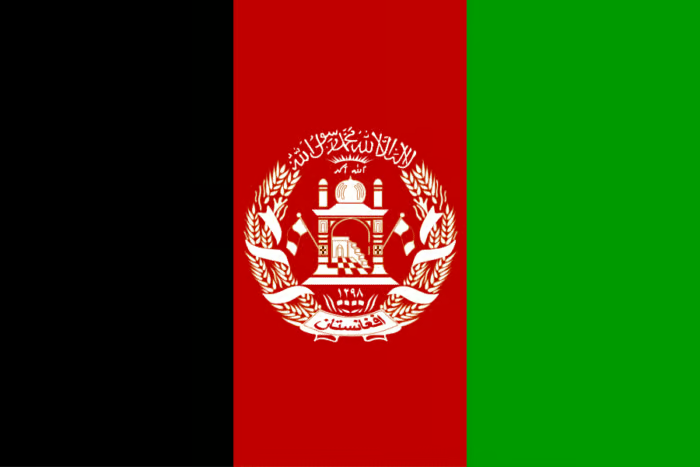
Afghanistan’s passport now traditionally holds the infamous first place as the world’s worst passport. Afghan passport holders can travel to a total of 38 destinations with some form of simplified entry procedure.
As for the remaining indicators, Afghanistan received the lowest possible score except when it comes to taxation.
Afghanistan’s low global mobility can be explained by multiple factors:
- Afghanistan has a long history of conflict, poverty, and food insecurity, leading to a large number of refugees
- The presence of terrorist groups poses a significant security risk
- The country’s government is not internationally recognized and maintains a limited number of diplomatic missions
- The government is responsible for systematic human rights violations, especially against girls and women
Syria

Holders of a Syrian passport can travel to 39 countries without having to undergo the regular visa procedure. The country’s performance in other metrics is either the lowest possible (perception and freedom) or median (taxation and dual citizenship).
Syria’s history of conflict doesn’t go back as far as Afghanistan’s, but it has created the same effects: economic devastation, safety and security issues, and a large number of refugees.
While the country has an opportunity to stabilize itself, it will likely take some time until that is reflected in the country’s passport strength.
Eritrea
Even though it facilitates streamlined entry into 51 countries, Eritrea ranks third on this list of the worst passports in the world because it scored the lowest grades across all other metrics. As one of the very few countries with citizenship-based taxation, it even got the lowest mark in that area.
Eritrea has a long history of war for independence and subsequent conflicts, and is governed by an unelected dictator, with the executive branch of government as the only functional one. Other reasons why Eritrea’s passport is weak include:
- Limited cooperation with international bodies
- Significant repression of its citizens with forced labor and conscription
- Involvement in regional conflicts
- Unreliable personal documentation of its citizens
Iraq
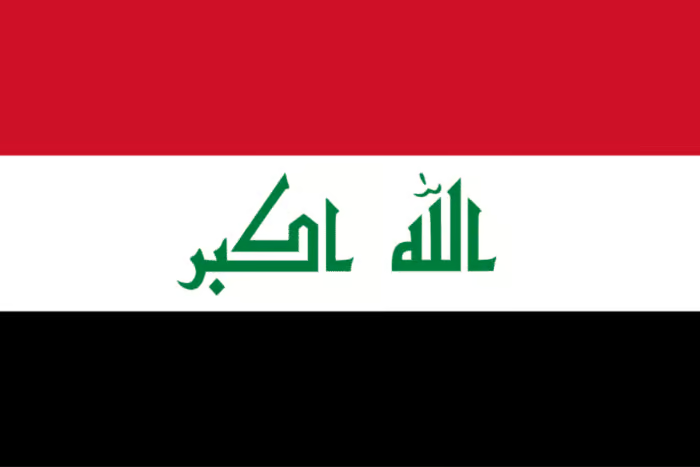
Iraq’s passport allows reduced-friction entry into 44 destinations. It has the lowest grades on global perception and personal freedom, and moderate grades on taxation and dual citizenship.
Iraq has had a turbulent history, including the 2003 U.S.-led invasion that toppled Saddam Hussein’s government, years of insurgency and civil conflict that followed, and the rise of ISIS, which seized parts of the country and declared a caliphate on them before being defeated.
Most recently, the country has faced a fragile currency, sectarian and ethnic violence, and repeated attacks as part of a wider regional conflict.
North Korea
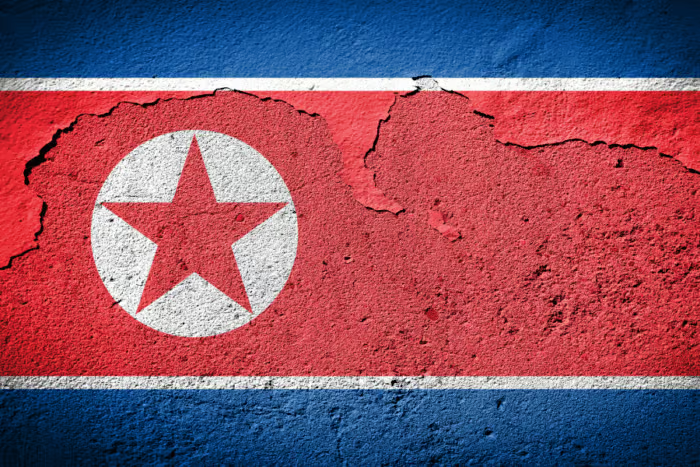
Holders of North Korea’s passports can enter 50 destinations without a full visa application. The passport scored the lowest grade on all remaining factors, except taxation.
The weakness of North Korea’s passport is largely due to:
- International isolation driven by the country’s missile and nuclear programs
- Poor diplomatic relationships with other countries
- A long track record of human rights abuse
Pakistan
Pakistan’s passport allows its holders entry into 45 countries with eased entry requirements. The country is also the first on this list to have not scored the lowest possible grade in any of the remaining metrics.
In its post-independence history, Pakistan has cycled between authoritarian and democratic rule, with the looming presence of its military in political life. The country also has internal security issues due to the presence of extremist groups with ties to the military, and it is facing a financial crisis.
Iran
Travelers holding an Iranian passport can enter 55 countries without undergoing the full visa application process. The country also scored the lowest possible grades on all the criteria except taxation.
Even before the current armed conflict with the U.S., there were reasons why Iran’s passport was regularly featured on lists of the world’s worst passports. These include:
- Internal turmoil due to dissatisfaction with the government
- International sanctions due to its nuclear enrichment program and subsequent economic decline
- International isolation due to political and ideological differences with the West
- Involvement in regional conflicts
- Internal human rights abuses and repression
Palestinian Territory
The Palestinian Territory passport allows access to 50 destinations with a simplified entry procedure. It scored the lowest marks on global perception and personal freedom, but it did better on taxation and dual citizenship.
The reasons why the Palestinian passport is considered weak include:
- The ongoing conflict and occupation have left the territory’s political and legal status unresolved for decades
- Palestine still lacks full statehood and sovereignty, even though it has been recognized as a state by over 80% of the UN members
- The Palestinian passport serves more as a travel document than proof of citizenship, leading many of its holders to be considered stateless persons
Somalia
Holders of a Somali passport can travel to 45 countries without having to apply for a full visa. The passport scored the lowest marks on the freedom and perception factors, the highest mark on dual citizenship, and a middle mark on taxation.
Somalia is considered one of the most fragile states in the world, having been a stateless country for over two decades and continuing to struggle even after establishing an internationally recognized government in 2012. The reasons behind its weak passport include:
- Federal fragmentation, with states retreating from the federation
- An ongoing Islamist insurgency
- Heavy dependence on foreign aid and international troops for security
- Widespread corruption, poverty, and a humanitarian crisis
Yemen
Yemen’s passport allows simplified entry into 46 countries. While it doesn’t rank well on freedom and perception, it scores the highest mark on dual citizenship and a passing rank on taxation.
Yemen is undergoing one of the world’s worst humanitarian crises, with close to 20 million people in the country in need of humanitarian aid. The reasons behind its weak passport include:
- A three-sided civil war in which all parties commit serious abuses without any accountability
- Direct military strikes from foreign countries
- Terrorism against international shipping
- Severe restrictions on civil liberties
- An almost complete lack of independent international oversight to track abuses or pursue accountability
Why Are Some Passports Weaker Than Others?
The strength of a passport reflects the issuing country’s international standing in terms of diplomacy, politics, and economy. The countries whose passports are weaker tend to exhibit one or multiple traits that are either a cause or a consequence of low standing, such as:
- Armed conflict and political instability: Foreign governments can view travelers from these countries as potential security risks or asylum seekers
- International sanctions: Trade is one of the major drivers for establishing visa-free agreements between countries
- Diplomatic isolation: Countries with low diplomatic activity will have a harder time establishing visa-free agreements with other countries
- Widespread corruption: Countries whose passports are easily forged can face tighter entry restrictions
The behavior of passport holders might also influence the passport’s strength. Countries whose citizens tend to overstay abroad might face a stricter visa issuance regime.
Impact of Having a Weak Passport
The ability to cross borders easily is sometimes seen as a matter of convenience. However, having a weak passport can have a much more serious impact on a person’s life, as it may lead to:
- Restricted employment, business, and investment opportunities: International business often requires international travel, sometimes on short notice. Holders of weak passports can face longer waiting times, higher costs, and even refusal, all of which can reduce their access to economic opportunity
- Limited access to banking and financial services: Banks and financial institutions abroad may apply stricter due diligence or refuse services to holders of weaker passports. This can make it harder to open foreign accounts or move assets internationally
- Less freedom to relocate in a crisis: In the event of political or economic upheaval, or even natural disasters, a weaker passport limits access to safe countries, and reduces the chances of getting there in time
How To Get a Stronger Passport
Passports are generally only issued to citizens, so getting a stronger passport would require you to obtain citizenship of a country that issues it. Countries can have two types of citizenship pathways for foreigners:
- Regular citizenship pathways
- Special citizenship pathways
Regular Citizenship Pathways
While each country has its own rules for admitting foreigners into citizenship, the most common pathways include:
- Citizenship by descent: Citizenship is granted to descendants of citizens, with the familial relationship required varying by country. Some recognize claims through grandparents, or even great-grandparents, while others restrict it to parents
- Citizenship by naturalization: Citizenship is granted to foreigners who have legally lived a certain number of years in the country and meet other requirements, such as language proficiency
- Citizenship through marriage: Citizenship is granted based on marriage to a citizen, usually with additional conditions regarding the length of marriage and years of residence in the country
Special Citizenship Pathways
Some countries also have exceptional pathways into citizenship, including:
- Citizenship by merit, which allows the government to grant citizenship to individuals based on their merit to the nation. Countries that have this option include Malta and Serbia
- Citizenship by investment (CBI), which allows foreigners to be admitted into citizenship after meeting an investment requirement. Most popular CBI programs are those of Eastern Caribbean states (St. Kitts and Nevis, Grenada, Dominica, St. Lucia, Antigua and Barbuda) and Turkey
Investment can also be used to obtain permanent residence in a country as part of the naturalization process. You can use this pathway to obtain EU citizenship through countries such as Greece and Bulgaria.
When choosing a country, it’s important to look beyond its passport’s global mobility benefits and examine its political stability, tax landscape (existence and rates of income, corporate, wealth, and other taxes), and treatment of citizens.
The process itself can be complicated, with numerous considerations to make and multiple steps to follow. In some cases, you might also require strategic tax restructuring to either avoid additional tax obligations or obtain the full benefits of the new tax jurisdiction. For these reasons, it’s best to have the process guided and managed by experienced professionals such as Nomad Capitalist.
Enhance Your Global Mobility With Nomad Capitalist
Nomad Capitalist is an advisory firm that specializes in cross-border mobility and wealth protection. We’ve helped over 1,500 clients secure a second residence or citizenship, reduce their tax liabilities, and take advantage of investment opportunities abroad.
Our flagship service is the Action Plan, a step-by-step guide to achieving your financial and lifestyle goals. Each Plan is developed around a client’s specific circumstances to present the most efficient pathway to meeting their objectives.
Here’s what partnering with Nomad Capitalist on an Action Plan looks like:
- We ask you to fill out a form to help us determine whether we’re a good match
- We schedule a 45-minute onboarding call to learn more about your circumstances and desires
- Our agents develop an Action Plan and present it to you for approval
- We implement the Plan over a 12-month period, managing all the administrative parts
- You continue receiving support from us even after the Plan is implemented
If your goal is to improve your global mobility, Nomad Capitalist can help you determine which passports can best serve that objective. We can assist in determining which ones you’re most likely to acquire, based on criteria such as your existing passport, your willingness to invest, and the country’s citizenship process.
Once you choose a suitable country, we can provide management and support through the whole process of becoming a citizen and acquiring a passport. To get started right away, contact Nomad Capitalist!

Leaving Australia Permanently: A Guide for Australians on Tax Obligations and Residency
If you’re an Australian citizen leaving the country permanently, one of the most significant changes is to your tax liability. Residents are taxed on their worldwide income, but non-residents are taxed only on the income sourced in Australia. Which liability applies to you depends on your tax residency status. In this article, we’ll examine how […]
Read more
Withdraw Super When Leaving Australia: A Guide for Temporary Residents
Superannuation, or super, is a retirement savings system funded by contributions most employers make for their employees in Australia. Typically, you can access it once you reach the preservation age and meet other criteria. However, if you’re a temporary resident in Australia, you might be able to claim it when leaving the country. In this […]
Read more
Thailand Visa Requirements: From Short Stays to 20-Year Residency
Thailand is one of the most popular tourist destinations in the world, with its beautiful nature, friendly people, and rich cultural heritage. In recent years, the country has also been positioning itself as a regional hub for business and innovation, attracting significant foreign investment. To accommodate a range of reasons to visit the country, Thailand […]
Read more