


The 7 Best Countries for Medical Tourism (2026 Guide)
September 2, 2026
Every year, millions of people travel outside their home countries in search of more affordable, immediate, or cutting-edge health services. Medical tourism is a $34 billion industry, and the countries range from budget-friendly options in Southeast Asia and Latin America to advanced, higher-cost European and Middle Eastern destinations.
In this guide, we’ll examine the seven best countries for medical tourism. You’ll learn:
- What drives people to seek medical services abroad
- Which are the most popular countries for medical travel
- How to gauge the quality of medical services abroad
- What risks are associated with traveling to a foreign country for medical reasons
Why Are Medical Tourism Countries Popular?
The major driver of medical tourism is the cost of medical procedures. Treatments can be significantly more affordable abroad, especially for U.S. citizens.
The table below outlines the costs of specific medical procedures in the U.S. and the most popular medical tourism countries—Turkey and Thailand:
| Treatment | Cost in the U.S. | Cost in Turkey | Cost in Thailand |
| Rhinoplasty | USD 10,000 | USD 3,487 | USD 2,925 |
| All-on-4 dental implants | USD 25,000 | USD 3,500 | USD 6,000 |
| Knee replacement | USD 35,000 | USD 6,950 | USD 7,923 |
| Gastric sleeve | USD 18,000 | USD 3,294 | USD 11,700 |
Disclaimer: Prices throughout this article reflect the information available at the time of writing and may change over time. Always check with your healthcare provider for the latest costs.
Additional reasons why people may decide to seek out medical treatments abroad include:
- Lack of insurance coverage in their home country: Certain medical procedures, such as elective cosmetic, dental, fertility, or weight-loss surgeries, might not be covered by regular insurance
- Access to innovative procedures: Factors such as legislative framework, access to advanced technology, and physician training vary between countries, affecting the availability of specific treatments
- Prompt medical care: Even countries that offer advanced medical services might have waiting lists that postpone treatment for months or longer, driving patients to seek care elsewhere
Traveling abroad is also a popular option for patients seeking privacy, which is common for aesthetic or reproductive treatments. In those cases, recovery is often completed before returning home.
Popular Specialties and Procedures
While you can typically obtain any medical procedure abroad, areas that primarily drive patients to medical tourism include:
- Organ transplant treatments: Transplant procedures sought abroad include organ, tissue, and stem cell treatments, driven primarily by lower costs and shorter waiting lists
- Cosmetic procedures: Elective aesthetic procedures such as rhinoplasty, breast augmentation, or hair transplant are often part of cosmetic vacation packages that include recovery time
- Dental procedures: Primarily driven by lack of insurance coverage and rising costs, dental procedures are among the most sought-after treatments abroad
- Oncology procedures: Oncology patients typically travel abroad for a second opinion or to access treatments that are not available in their home country, including alternative and high-risk procedures
- Substance abuse disorder treatments: Patients who seek rehab abroad usually do so either to access treatments not available in their home countries or for privacy reasons
- Reproductive health treatments: Procedures sought abroad include fertility treatments and abortions, driven primarily by long waiting lists and legal restrictions in patients’ home countries
Top 7 Medical Tourism Countries in 2026
Seven of the most popular countries for medical tourism in 2026 include:
- Thailand
- Turkey
- India
- South Korea
- Mexico
- Malaysia
- Costa Rica
Learn more: Browse our guides to learn about the best countries to buy gold, countries with the highest taxes, safest countries in South America, and worst passports in the world.
1. Thailand
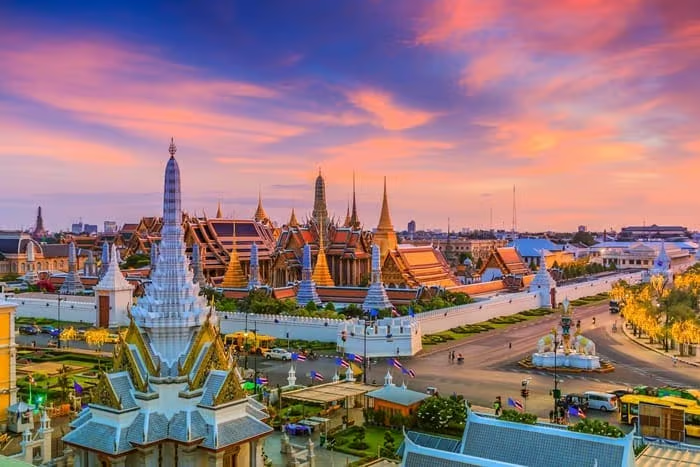
Thailand is a regional medical hub and one of the top medical destinations in the world. The country offers a dense network of over 60 hospitals accredited by the Joint Commission International (JCI), with hundreds of medical facilities in total.
The top four medical facilities in Thailand are all located in Bangkok:
- Bumrungrad International Hospital
- Siriraj Piyamaharajkarun Hospital
- Samitivey Sukhumvit Hospital
- King Chulalongkorn Memorial Hospital
Thailand is one of the most sought-after destinations for reproductive health treatments, with fertility centers offering a full range of services that include fertility preservation, in vitro fertilization, and intracytoplasmic sperm injections. The country is also increasingly visited by patients looking for both surgical and non-surgical cosmetic treatments.
Health procedures in Thailand are significantly more affordable than in the U.S., offering savings of 50%–70%:
| Procedure | Starting Cost in the U.S. | Starting Cost in Thailand |
| IVF | USD 12,000 | USD 3,000 |
| Stem cell therapy for male infertility | USD 15,000 | USD 7,500 |
| Blepharoplasty (eyelid correction) | USD 3,500 | USD 1,500 |
| Liposuction | USD 5,000 | USD 699 |
Bonus read: Learn more about the requirements for obtaining a Thailand visa in our guide.
2. Turkey
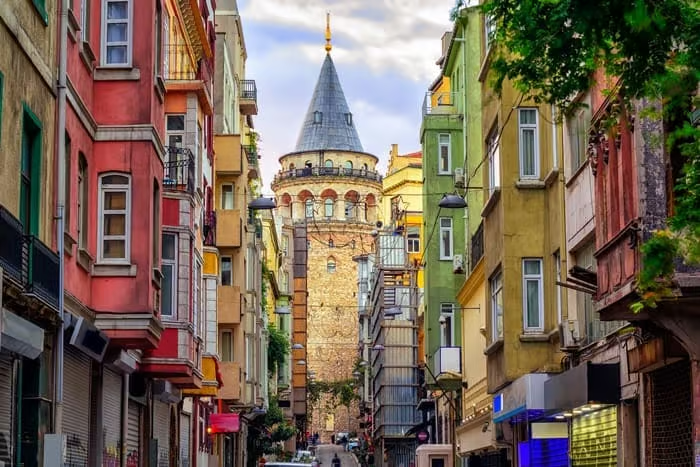
Turkey attracted close to 1.4 million medical tourists in 2025, generating USD 3 billion in revenue. The country has more than 40 JCI-accredited hospitals and a number of prominent healthcare chains that include:
- Acibadem Hospitals Group
- Koç Healthcare International
- Medical Park Hospitals
- Memorial Hospitals Group
Turkey is renowned as a destination for hair transplant procedures. In addition to aesthetic surgery, medical tourists also visit it for non-elective procedures, such as transplants, cancer treatments, and open-heart and cardiovascular surgery. The country is also a popular hub for gynecological procedures and IVF.
The prices of procedures in Turkey are typically 50%–65% lower than in the U.S.:
| Procedure | Starting Cost in the U.S. | Starting Cost in Turkey |
| Hair transplant | USD 8,000 | USD 2,300 |
| Cheek implants | USD 7,500 | USD 1,300 |
| IVF | USD 12,000 | USD 2,700 |
| Liver cancer removal | USD 180,000 | USD 10,800 |
3. India
With more than 69,000 hospitals and 1.2 million registered doctors, India’s healthcare network welcomed more than half a million medical tourists in 2025. The country has 65+ JCI-accredited healthcare entities, 58 of which are hospitals.
The country’s most prominent healthcare centers include:
- Medanta in Gurugram
- Apollo Hospital in Chennai
- Kokilaben Dhirubhai Ambani Hospital & Medical Research Institute in Mumbai
India mostly attracts patients from other Asian countries, including Bangladesh, Iraq, Uzbekistan, and Oman. It’s also a destination for patients from African countries such as Somalia and Kenya.
The sought-after procedures in India include cardiac surgery, organ transplants, cancer treatments, as well as cosmetic, dental, and fertility care. India is also a noted destination for traditional medicine, usually in the form of AYUSH-based wellness therapy.
Healthcare costs in India are 65%–90% lower than in the U.S.:
| Procedure | Starting Cost in the U.S. | Starting Cost in India |
| Radiofrequency ablation | USD 30,000 | USD 3,200 |
| Tumescent liposuction | USD 5,200 | USD 2,200 |
| IVF with gender selection | USD 25,000 | USD 5,600 |
4. South Korea
South Korea is East Asia’s hub for medical tourism, attracting more than 5 million medical tourists between 2009 and 2024. In 2024, more than 1.1 million foreign patients sought medical care in the country, with the top three nations of origin being Japan, China, and the U.S.
South Korea has the highest number of beds per 1,000 of population among OECD countries, indicating a highly developed healthcare sector. The country currently has six JCI-accredited medical facilities, but relies primarily on its rigorous national standard for quality assurance.
The top medical centers in South Korea are concentrated in Seoul, and they include:
- Samsung Medical Center
- Asan Medical Center
- Severance Hospital
- Seoul National University Hospital
The top specializations sought by medical tourists in South Korea include dermatology, integrative internal medicine, plastic surgery, and health screening. The cost of procedures isn’t as low as in some other popular destinations, but they still tend to be 30%–45% more affordable than in the U.S.:
| Procedure | Starting Cost in the U.S. | Starting Cost in South Korea |
| Acne scar treatment | USD 3,500 | USD 2,200 |
| Thigh lift | USD 8,000 | USD 5,800 |
| Vitrectomy | USD 7,500 | USD 4.500 |
5. Mexico
Mexico’s USD 2.1 billion medical tourism industry benefits greatly from the country’s proximity to the United States, as Americans tend to travel to neighboring countries for medical treatments. Estimates place the total number of medical tourists to Mexico between 1.2 and 3 million per year.
Mexico has 19 medical organizations with JCI certifications. Many of them have organizational facilities across the country, including in the border cities of Tijuana, Ciudad Juárez, and Mexicali, which see the largest influx of U.S. medical tourists.
The most highly rated medical systems in the country are located in Mexico City, including:
- Hospital Medica Sur
- IMSS–Centro Medico Nacional Siglo XXI
- IMSS–Centro Medico Nacional La Raza
- Centro Medico Nacional 20 de Noviembre
The medical services that attract the most interest from U.S. medical tourists include dental and cosmetic procedures, as well as weight-loss surgery and cardiovascular and orthopedic treatments.
The prices of medical treatments in Mexico tend to be 40%–65% lower than in the U.S.:
| Procedure | Starting Cost in the U.S. | Starting Cost in Mexico |
| Veneers | USD 1,200 | USD 250 |
| Stomach resection | USD 55,000 | USD 15,000 |
| Septoplasty | USD 8,000 | USD 1,700 |
6. Malaysia
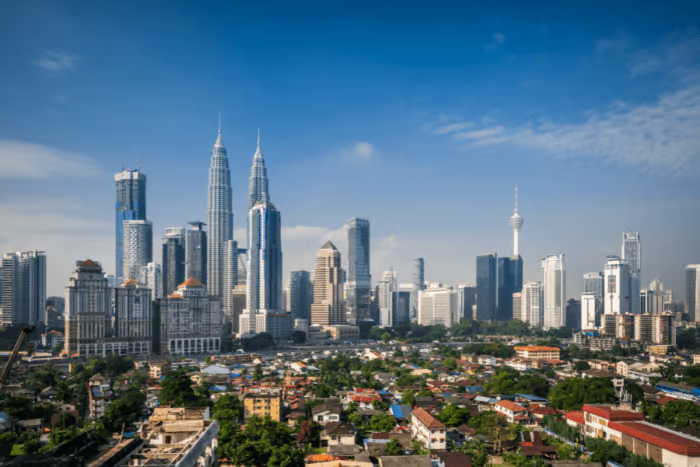
Malaysia welcomed 1.6 million healthcare tourists in 2024, making it one of the most visited medical destinations in the world. Healthcare travel is facilitated by the Malaysia Healthcare Travel Council, a government agency set up to connect patients with healthcare providers in the country. The agency also offers concierge services.
Malaysia has 17 JCI-accredited healthcare entities, including 16 patient-care facilities—15 hospitals and one ambulatory care facility—plus one laboratory. The number of all hospitals and clinics in the Malaysia Healthcare program is over 80.
Some of the top medical centers in Malaysia include:
- Sunway Medical Center in Subang Jaya
- Gleneagles Hospital in Kuala Lumpur
- Subang Jaya Medical Center
- Prince Court Medical Center in Kuala Lumpur
Malaysia offers specialist care in oncology, cardiology, fertility, and orthopedics, among other specializations. It also promotes care pathways tailored to patients’ age and life circumstances, including pediatric care.
The prices of medical procedures in Malaysia tend to be 65%–80% lower than in the U.S.:
| Procedure | Starting Cost in the U.S. | Starting Cost in Malaysia |
| Radiotherapy | USD 18,000 | USD 4,500 |
| Heart cryoablation | USD 28,000 | USD 10,500 |
| Shoulder replacement | USD 25,000 | USD 11,500 |
7. Costa Rica
The primary reason why medical tourists visit Costa Rica is the quality of its healthcare service. The country is located within a three- to five-hour flight from the U.S., so convenience is an important factor, but its success results primarily from the expertise of its medical personnel, many of whom were trained in the U.S. or Western Europe.
Costa Rica has two JCI-accredited medical centers, which are also the top facilities in the country:
- Hospital Clinica Biblica
- Hospital CIMA San José
The most sought-after specialties by medical tourists in Costa Rica include dental care, cosmetic surgery, and weight-loss surgery. Compared with treatment prices in the U.S., health services in Costa Rica are 45%–65% less expensive.
How To Evaluate a Medical Service Provider Abroad
Choosing the best medical tourism destination is only one step toward getting the procedure or treatment you need. Within the same destination, the quality of care varies widely between clinics, and the fact that a certain country attracts international patients shouldn’t serve as accreditation for every health facility in that country.
For the safest treatment and proper aftercare, it’s important to evaluate the hospital and its full list of services. Pay special attention to:
- Accreditation: Look for hospitals that are accredited with the JCI or a similar recognized body to ensure the provider meets international quality standards
- Practitioner credentials: You should be able to confirm the credentials of the doctor who will be treating you, as well as their experience with specific procedures
- Communication: Doctors and staff should speak a language you understand, since miscommunication can present risks
- Aftercare plan: Examine the recommended recovery time and post-operative arrangements to ensure follow-up care is available either with the original doctor or at a facility in your home country
If your procedure requires extensive recovery time and precludes air travel, you should verify whether the arrangements for it are included in the medical package. You should also check whether the hospital offers assistance with obtaining a medical visa if it’s needed for a longer stay.
A Long-Term Approach to Healthcare Access Abroad
For many travelers, one short-stay visit to a medical tourism destination is enough to receive the treatment and recover. Many countries have special medical visas for international patients, while others allow visitors on regular visas to undergo medical procedures in the country.
However, the situation changes for individuals who require ongoing care, regular specialist appointments, or long-term access to health services.
Beyond immediate medical needs, access to high-quality and affordable healthcare is an important consideration in retirement planning. Many retirees and internationally mobile individuals choose to spend their later years in countries that offer advanced healthcare systems.
A second residency can provide a more permanent solution for individuals who want greater flexibility in where they live and how they access medical services. However, navigating a second residency can be complex, as it requires understanding local legal processes, meeting strict eligibility requirements, and interacting with local administration in a foreign language.
Professional assistance can simplify the process. For guidance on where to apply for a second residency and how, contact Nomad Capitalist.
Live Where You’re Treated Best With Nomad Capitalist
Nomad Capitalist is a global mobility and wealth protection consulting firm. We’ve helped more than 1,500 clients secure a second residency or citizenship, legally reduce their tax burden, and explore investment opportunities abroad.
Our core service is the Action Plan, a step-by-step guide for achieving your financial and lifestyle goals. We define the Plan’s objectives after taking into account your unique circumstances and desired outcome, and we build a blueprint to get you there with as little friction and delay as possible.
Here’s what partnering with Nomad Capitalist looks like:
- We ask you to fill out a form to help us determine whether we’re a good match
- We schedule a 45-minute onboarding call to learn more about your situation and desires
- Our agents develop an Action Plan and present it to you for approval
- We implement the Plan over a 12-month period, managing the administrative parts
- You continue receiving lifelong support from us after the Plan is implemented
Nomad Capitalist can advise you on choosing the best country for securing residency based on various criteria, including access to high-quality healthcare. We can assist you with the application process to maximize efficiency and help you avoid any missteps that could cost you time and money. To learn more about getting a second residency, contact Nomad Capitalist today!


Countries That Will Pay You to Move There
Italy has the highest share of people over 65 years old of all EU member states, and if this trend continues, the implications could be serious. Demographic decline is an increasingly pressing issue for a number of nations. Some countries, faced with ageing populations and abandoned towns, are offering incentives in an effort to attract […]
Read more

Safest Caribbean Islands in 2025: The Ultimate Guide
For those looking to escape to a tranquil and secure paradise, the Caribbean islands offer a welcoming, safe environment that attracts a diverse range of visitors. What’s more – if you are looking for a second citizenship, there are a number of ways to achieve this in the Caribbean. In terms of safety, the region […]
Read more

Visa-Free Countries for US Visa and Green Card Holders
For high-net-worth entrepreneurs, global mobility is more than a luxury; it’s a necessity. As a US visa or Green Card holder, you enjoy the privilege of being able to travel to numerous countries without the hassle of securing additional visas. Imagine the convenience: jetting off for business deals, scouting new investment opportunities, or sneaking in […]
Read more