
Opening a business in a country with no corporate tax is a tax optimisation move used by holding companies, digital-first businesses, and high-net-worth investors looking to legally reduce their tax exposure.
These tax-friendly jurisdictions are typically small nations that rely on alternative income sources, such as tourism, licensing fees, or financial services, and often pair zero-tax policies with residency programs that aim to attract foreign investors.
In this article, we’ll examine the zero-corporate-tax countries where you can establish a business in 2026. You’ll learn about:
- Different ways countries might tax businesses
- Countries with zero corporate income tax
- Low business tax countries that might be worth considering
- Important considerations to make when choosing a zero-tax jurisdiction
What Does “Zero Corporate Tax” Actually Mean?
The term “zero corporate tax” usually refers to jurisdictions that don’t impose corporate income tax (CIT), or tax on your company’s profits. While some countries are true zero-corporate-tax jurisdictions, others apply the 0% rate only under specific conditions. Examples include:
- Panama has a territorial tax system that levies 0% CIT on foreign-sourced income, while applying the full tax rate on domestic income
- The United Arab Emirates offers a 0% CIT on qualifying income for Free Zone companies that operate in specific industries, have real local substance, keep their unqualifying income under a certain threshold, and meet other conditions
- Monaco doesn’t impose CIT for companies that earn less than 25% of their revenue outside of Monaco
Also note that “zero corporate tax” doesn’t mean your company won’t have any levies. A business can still be subject to other taxes and charges, such as:
| Tax or Charge | Explanation |
| Withholding tax | Deducted from dividends, interest, or royalties paid to non-residents |
| Value-added or sales tax | Imposed on goods and services, independent of corporate profits |
| Payroll or social security contributions | Mandatory for local employees |
| Property or stamp duty | Applied to real estate transactions or company registration |
| Capital gains tax | Occasionally levied separately from corporate income tax on the sale of assets or financial instruments |
6 Countries With No Corporate Tax

The countries that typically don’t levy a tax on corporate income include:
- Cayman Islands
- Bahamas
- British Virgin Islands
- Bermuda
- Anguilla
- Vanuatu
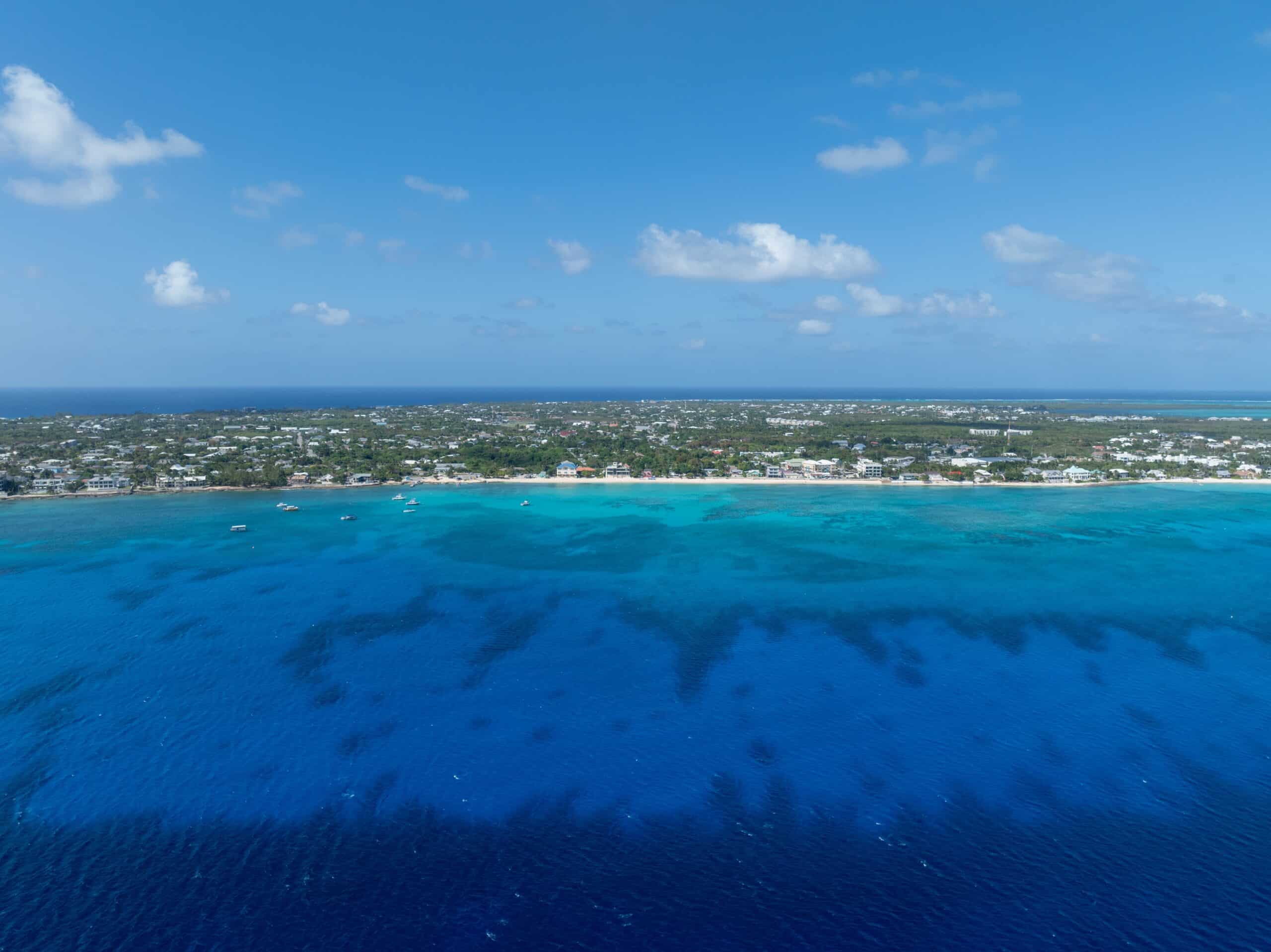
1. Cayman Islands
The Cayman Islands is one of the best-known true tax havens. The country doesn’t levy any direct taxation on corporations, including income tax, withholding tax on dividends or interest, or corporate capital gains tax.
The Cayman Islands has the same no-tax policy for personal income, and it doesn’t tax wealth, property, inheritance, or gifts. It also doesn’t have a value-added tax.
The country does charge 22%–27% import duties, as well as a 7.5% stamp duty on immovable property transfers.
If you want to become a resident of the Cayman Islands, the country offers several pathways that lead to either long-term or permanent residency:
- Real estate investment of USD 1.2 million for a 25-year long-term residence
- Real estate investment of USD 2.4 million for permanent residence
- Company formation and investment of USD 1.2 million for permanent residence
- A 10% ownership stake or a senior management position in a qualifying company for a 25-year long-term residence
2. Bahamas
The Bahamas is a mostly zero-tax corporate tax jurisdiction that doesn’t impose corporate income tax on most businesses. The sole exception is large international businesses with revenues exceeding EUR 750 million (USD 870 million), which are subject to a corporate income tax at a rate of 15%.
The country doesn’t have a corporate capital gains tax or a payroll tax, although it requires companies to contribute to National Insurance for their employees.
The Bahamas generally doesn’t impose a withholding tax on dividends, interest, or royalties. However, 5% stamp duty is levied on income remitted to a related party abroad as a dividend or payments of services of related parties when such transfers exceed BSD 500,000 (USD 500,000) in a year.
Beyond levying zero corporate income tax, the Bahamas also doesn’t impose any taxes on personal income, wealth, inheritance, or gifts. Individuals employed in the Bahamas must also contribute to National Insurance.
The VAT is charged at two rates:
- A 10% general rate for most goods and services
- A lower, 5% rate that applies to certain essential goods
The Bahamas maintains a property tax, with rates depending on the classification and value of the property.
To become a resident of the Bahamas, you need to invest at least USD 1 million in real estate or zero-coupon bonds issued by the country’s Central Bank. You will be granted economic permanent residence and required to keep your investment for a minimum of 10 years.
3. British Virgin Islands
The British Virgin Islands are a true zero-corporate-tax-rate country, as it doesn’t levy income tax or withholding tax on dividends and interest on companies. Businesses are required to contribute to several taxes and schemes for their employees, including:
- The payroll tax
- Social security contributions
- National health insurance
The country also levies a 3.5% tax on all funds leaving the country through money transfer agencies.
There is no value-added tax in the British Virgin Islands, and the country doesn’t impose personal income tax. It does, however, maintain real property tax, as well as stamp duty on real estate transactions.
The British Virgin Islands don’t have a residency program for investors. The country has announced that it is considering establishing one in 2025; however, as of 2026, the program has yet to launch.
You can still become a resident of the country by meeting the regular requirements, which include living in the country for 10 consecutive years with a maximum gap of a year at a time.
4. Bermuda
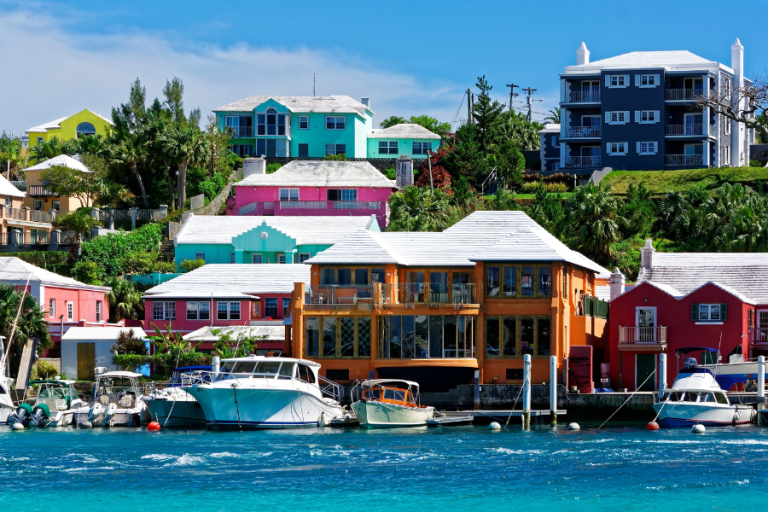
Bermuda is a largely tax-free jurisdiction, imposing only a 15% corporate income tax on large multinational companies whose revenue exceeds EUR 750 million (USD 870 million). Companies that offer corporate services and financial services are subject to special taxes at the following rates:
| Type of Company | Tax Rate |
| Corporate services | 7% of revenue |
| Banks | 0.0075% of consolidated gross assets |
| Domestic insurers | 3.5% on gross premiums |
| Money service businesses | 1% on outgoing money transmissions |
The country doesn’t levy a withholding tax, corporate capital gains tax, or any taxes on individuals. Employers are required to contribute to their employees’ payroll tax and social insurance.
While Bermuda doesn’t have a value-added tax, it does tax property at varying rates depending on its classification. It also imposes a tax on vacation rental units, as well as an annual rental property fee.
You can get indefinite residency in Bermuda by making a USD 2.5 million investment in one of the following:
- Residential or commercial real estate
- The country’s Sinking Fund or Trust Fund
- Registered Bermuda charity
- An existing or new business
- Another social or otherwise useful venture for the country
5. Anguilla
Anguilla imposes no direct taxation on companies or individuals. It doesn’t have a corporate or personal income tax, capital gains tax, or a withholding tax. The country does have a 13% value-added tax, and it imposes taxes and levies related to tourism, including:
- A 10% accommodation tax charged on each visitor to the country
- A tourism marketing levy of USD 3 per night per guest, collected from visitors
- Villa rental fees on non-citizens who are permitted to rent villas
You can become a permanent resident of Anguilla in one of several investment routes:
- Invest at least USD 150,000 in the country’s Capital Development Fund
- Invest at least USD 750,000 in residential real estate (secure residency for up to four individuals)
- Invest at least USD 750,000 in business or business and residential premises
Only the route that includes the purchase of business premises will secure you the right to work in Anguilla. The other two pathways only secure the right to reside in the country.
Anguilla also offers a tax residence program that allows you to become a tax resident if you agree to pay an annual lump sum of USD 75,000, transfer up to five years’ worth of payments in advance, and purchase USD 400,000 worth of property in the country.
6. Vanuatu

Vanuatu doesn’t impose corporate income tax, nor does it levy other direct taxes on businesses. Companies can remit any amount of funds from the country free of withholding tax, and they are not subject to corporate capital gains tax.
There’s also no personal income tax in Vanuatu, making it a jurisdiction free of most forms of direct taxation. The country does impose some taxes and charges, including:
- A 15% value-added tax
- A 15% tax on rental income over VUV 200,000 (USD 1,700) in a six-month period
- Up to 1% on share transfers and eligible transactions
Vanuatu also charges import duties, as well as stamp duties on certain property transactions.
You can become a permanent resident of Vanuatu as an investor if you demonstrate an intention to make a significant investment in the country. The government doesn’t disclose the required investment amount.
You can also apply for a residency visa if you plan to stay in the country for more than 12 months. You can apply as:
- A self-funded resident, if you have a stable source of income of at least VUV 250,000 (USD 2,100) per month
- A foreign investor, if you have a certificate from Vanuatu’s Investment Promotion Agency
- A leaseholder, if you have a leasehold on a property valued at a minimum of VUV 10 million (USD 84,600) and meet the minimum income requirements of VUV 250,000 (USD 2,100) per month
Countries With Low Corporate Tax Rates

While countries with a zero corporate tax rate might seem like the best choice for registering a business, many investors and entrepreneurs instead opt for jurisdictions with low corporate tax rates. Reasons include those countries’ more favourable reputation, access to transportation and logistics infrastructure, and proximity to other important markets.
Some of the most popular countries with low corporate tax rates include:
| Country | Corporate Income Tax Rate |
| United Arab Emirates | 9% |
| Hungary | 9% |
| Paraguay | 10% |
| Ireland | 12.5% |
| Singapore | 17% |
Factors To Consider When Choosing a Zero-Tax Country
Before you relocate or restructure your business in a country that doesn’t impose taxes on corporations, you should consider:
- Economic substance requirements: Countries may require real local business activity, including local staff, assets, and operations
- Controlled foreign corporation rules: Your home country may still tax offshore profits if your business qualifies as a controlled foreign corporation
- Reputational and banking risk: Zero-tax countries might face international scrutiny that makes banks or payment processors reluctant to work with companies registered there
- OECD global minimum tax (Pillar Two): Some countries, including the Bahamas and Bermuda, have implemented the minimum tax on large multinational businesses, and others might follow suit
Opening a company in a zero-corporate tax jurisdiction is only one step in optimising tax liabilities. Your tax residency, the manner in which your home country treats foreign income, and your company’s ability to meet ongoing substance requirements affect the longevity and performance of your arrangement.
For best results, it’s recommended to work with professional consultants who understand both the local rules and regulations in corporate tax havens, as well as the broader international context. For tailored guidance on all aspects of relocating to a zero-corporate-tax jurisdiction, contact Nomad Capitalist.
Become a Resident of a Zero Corporate Tax Country With Nomad Capitalist
Nomad Capitalist is an advisory company that focuses on international mobility and wealth protection. We’ve helped more than 1,500 clients obtain foreign residency, access international banking services, legally reduce their tax burden, and explore investment diversification opportunities abroad.
The core service we offer is the Action Plan, a blueprint for achieving your financial and lifestyle goals. When you partner with us, we build a Plan around your specific circumstances and goals and ensure the proper alignment and sequencing of all steps to avoid unnecessary delays and costs.
Here’s what working with us on an Action Plan looks like:
- We ask you to fill out a form to help us determine whether we’re a good match
- We schedule a 45-minute onboarding call to learn more about your situation and needs
- Your case manager develops the Action Plan and presents it to you for approval
- We implement the Plan over 12 months
- You continue receiving support from us even after the Plan is implemented
If you’re looking for a country with no corporate tax to establish a business presence, we can help you narrow down your choice to the most favourable jurisdiction. We can also assist with obtaining residence in the country that will allow you to operate your business. To get started, contact Nomad Capitalist right away!